Asked a burger shop owner about this once. He’d tried switching to a fancier plastic clamshell for a few weeks, thinking it’d look more upscale. Didn’t work out. His exact words, more or less: the burgers looked like they’d been sitting in a vending machine. Sales dipped on the fancy option, and within a month he’d gone right back to plain cardboard. Funny how often that happens the boring choice wins because it’s genuinely better at the job, not because it’s cheap.
That’s basically the whole story with cardboard burger boxes. Nothing flashy about them. But there are real, practical reasons this material has stuck around as the industry default for so long, and it’s worth actually breaking down why.
Steam Has to Go Somewhere, and Cardboard Lets It
A hot burger fresh off the grill throws off a decent amount of steam. That moisture needs an exit, and cardboard, being naturally porous, lets a lot of it escape gradually instead of trapping it right against the food. Seal that same burger in plastic and you get the opposite effect steam gets locked in, and within ten or fifteen minutes you’ve got a soggy bun that wasn’t soggy an hour ago.
This matters a lot more for delivery than people realize. Food can sit in a bag for twenty minutes or more before anyone opens the box. A cardboard box with a bit of ventilation built in sometimes just small vent holes punched into the design handles that trapped steam far better than anything fully sealed ever could.
Grease Doesn’t Wreck the Whole Thing
Burgers are greasy. Always have been, always will be, and packaging has to deal with that reality. Most food-grade cardboard these days gets a light coating wax, or a thin PE lining that stops grease from soaking straight through while still letting the box breathe a little. Genuinely hard combination to beat. The box holds its shape, doesn’t go see-through or fall apart on you, and the food inside still looks decent by the time it reaches whoever’s eating it.
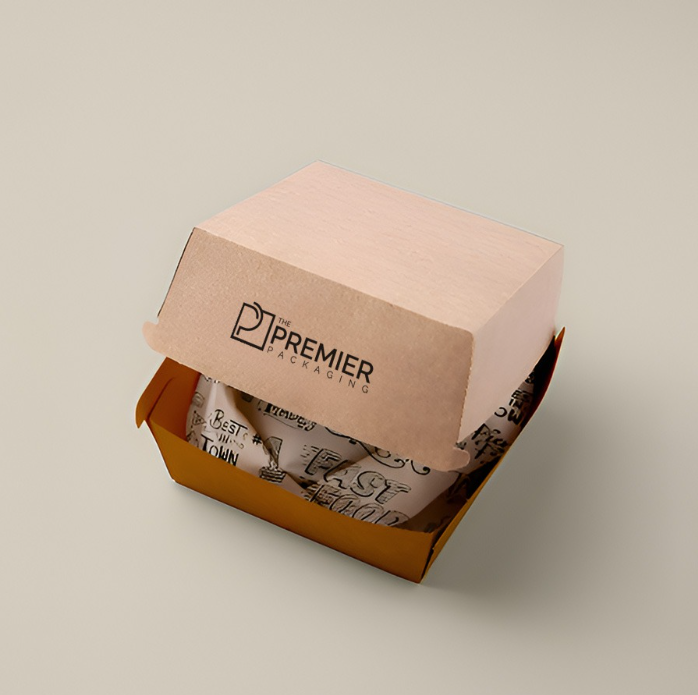
Skip the coating and you’ll get grease stains showing up within minutes. Doesn’t hurt the burger any, but it looks messy, and messy changes how people feel about the whole order even if they can’t articulate why. A properly coated brown burger box sidesteps that entirely while keeping that natural, food-safe look people associate with something fresh.
Sturdy Enough, Without Overdoing It
Corrugated cardboard what most burger boxes are actually made from has enough backbone to hold its shape under a stacked, loaded burger without folding in on itself, but it’s not so thick or heavy that it turns wasteful or expensive at scale. That balance is a big deal for anyone shipping or serving a few hundred orders a day, where cost and reliability both have to line up at once.
Too flimsy and the box caves in the second something else gets stacked on top in a delivery bag. Too heavy-duty and you’re just spending more without actually improving anyone’s eating experience. Cardboard tends to sit right in that middle ground for a standard burger, and that’s a big part of why it never really got replaced.
Sustainability Isn’t Just a Marketing Line Anymore
People pay attention to packaging waste now in a way they didn’t a decade ago, and food service specifically has taken some heat over how much plastic it goes through. Cardboard, particularly the uncoated or lightly coated stuff, is recyclable and often compostable depending on where you live, which puts it in a much better spot than foam containers or plastic clamshells that a growing list of cities have started banning outright.
Businesses already using cardboard, or switching to it, get to actually mean it when they call themselves eco-friendly. The material backs that claim up instead of just looking green on the outside.
It’s Cheap, and Easy to Brand
On top of everything functional, cardboard is just affordable to work with at any real scale. Flexographic printing keeps costs down even for big print runs, so a business can put its logo and colors on every single box without that decision blowing up the budget. That’s a real edge over materials that cost more to print on or that limit design options because of how transparent or textured the surface is.
Matters just as much for a small burger stand as it does for a bigger chain, maybe more. A well-branded cardboard box even something simple, one color makes a small operation look a lot more established than it might actually be, and customers register that impression whether they think about it consciously or not.
Design Still Has to Be Done Right
None of this means cardboard automatically fixes every packaging problem on its own. Ventilation has to be built in on purpose; a fully sealed cardboard box traps steam the same way plastic does. Sizing matters too. Too big and the burger slides around loose. Too small and you’re crushing the toppings or squeezing the bun out of shape before it even leaves the kitchen. Getting these details right takes some actual testing against your own menu, not just assuming the material alone will solve everything.
Bottom Line
Cardboard burger boxes earn their spot through a stack of practical advantages that are genuinely hard to match with any single alternative. They handle steam and grease better than sealed plastic, hold their shape without wasting material, back up the sustainability claims customers increasingly expect, and stay cheap enough to brand even for a small operation. Not flashy. But it keeps being the right call, which is exactly why it’s still the standard after all this time.